

Few airlines have a closer relationship with fashion than Air France. Over more than nine decades, its cabin crew uniforms have reflected changing styles, from military-inspired tailoring to haute couture created by some of France’s most celebrated designers.
Christian Dior, Cristóbal Balenciaga, Jean Patou, Nina Ricci, Carven and Christian Lacroix have all contributed to the airline’s wardrobe.
The uniforms tell a story of changing fashion and of how cabin crew work has evolved.
In 2026, Air France marked 80 years since its first female flight attendants joined the airline. According to Air France’s anniversary retrospective, the first group comprised 11 women. Today, the airline employs more than 13,000 cabin crew members, including 8,800 women.
Air France uniform history: A designer timeline
| Year | Designer or fashion house | Notable contribution |
|---|---|---|
| 1933 | Early airline uniforms | Military and luxury-hotel-inspired uniforms for male stewards |
| 1946 | Georgette Rénal | First uniform wardrobe for female flight attendants |
| 1951 | Georgette de Trèze | More feminine post-war tailoring |
| 1962 | Marc Bohan at Christian Dior | Haute couture uniform in Marceau blue |
| 1969 | Cristóbal Balenciaga | Tailored winter uniforms with an aviation-inspired look |
| 1976 | Jean Patou / Angelo Tarlazzi | Exclusive Concorde cabin crew uniform |
| 1978 | Carven, Nina Ricci and Grès | Mix-and-match wardrobe in blue, white and red |
| 1987 | Nina Ricci, Carven and Louis Féraud | Coordinated cabin crew wardrobe with staff input |
| 2005 | Christian Lacroix | Extensive uniform collection combining classic and contemporary styles |
The timeline is drawn from Air France’s official design archive and its 90th-anniversary historical collection.
1933–1951: From stewards to the first stewardesses
When Air France was established in 1933, its male stewards wore uniforms inspired by luxury-hotel staff and railway sleeping-car attendants.

White jackets, navy trousers, caps and military-style insignia conveyed formality and authority. The appearance reflected the standards of hospitality associated with early commercial aviation.
Air France recruited its first female flight attendants in 1946, following a selection process launched the previous year.
The fashion house Georgette Rénal designed their first uniforms, comprising tailored suits, summer dresses and coats. The clothing was practical, with a distinctly military appearance.

In 1951, Georgette de Trèze introduced a more feminine wardrobe, reflecting changing fashion and the growing prominence of women in airline service.
1962: Christian Dior brings haute couture into the cabin
The arrival of jet aircraft helped transform air travel in the early 1960s. Air France responded with a new uniform designed by Marc Bohan, then artistic director at Christian Dior.
Introduced in March 1962, the design replaced darker tailoring with a lighter shade known as Marceau blue.
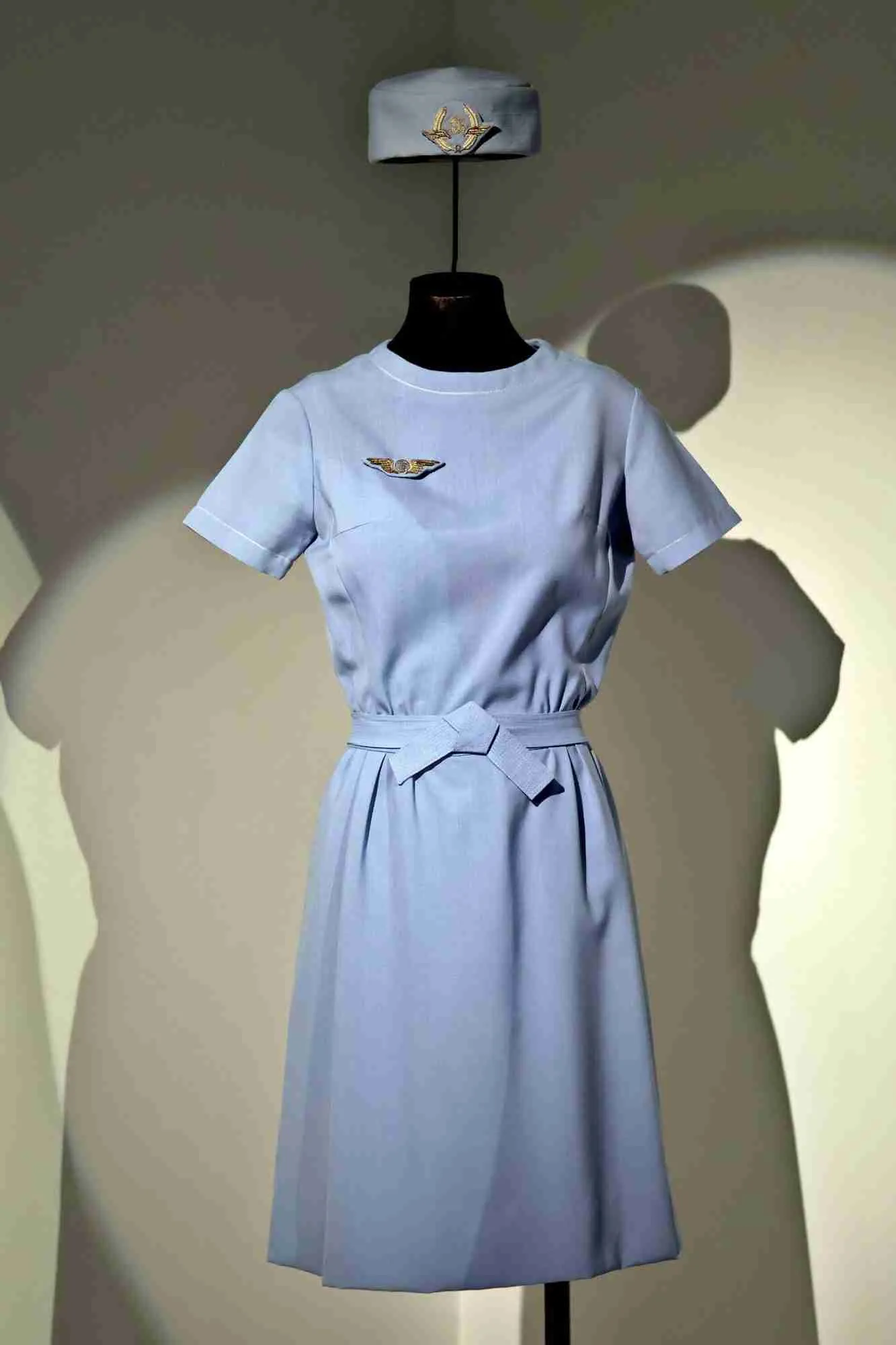
A structured navy hat bearing the airline’s insignia replaced the traditional beret.
The uniform became one of Air France’s best-known designs, establishing a relationship between French haute couture and the airline’s public image.
1969: Cristóbal Balenciaga’s aviation-inspired tailoring
Cristóbal Balenciaga designed new uniforms for Air France flight attendants in 1969.
His tailored winter suits had a structured, aviation-inspired appearance, combining the clean lines of contemporary fashion with the formality expected of airline uniforms.
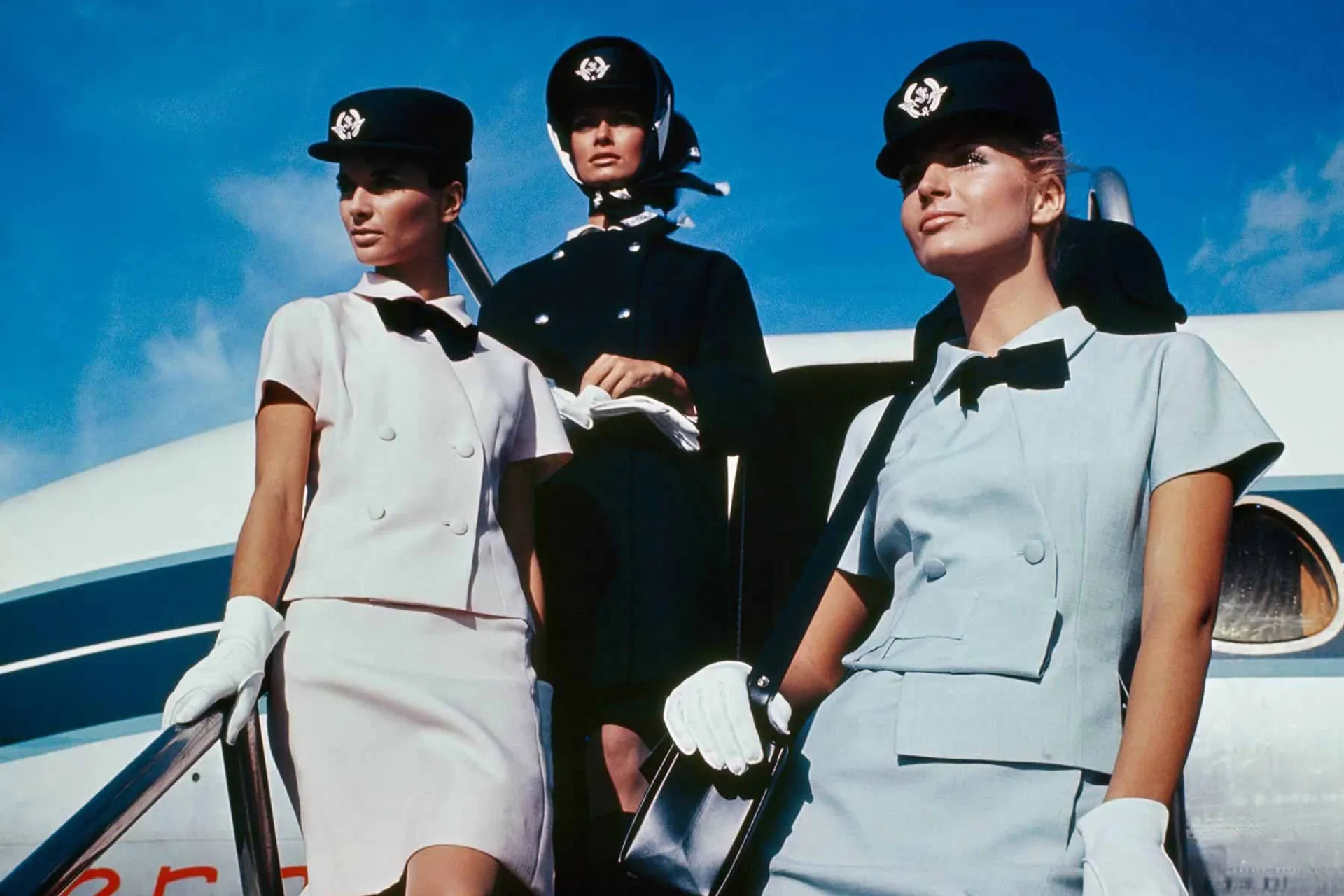
Balenciaga subsequently developed additional uniforms for ground staff in 1971.
However, Air France’s historical archive records complaints from flight attendants that designers were not paying enough attention to the practical demands of their work.
The criticism highlighted a continuing challenge: airline uniforms must be attractive, comfortable and suitable for safety-related duties.
1976: Jean Patou designs an exclusive Concorde uniform
Concorde’s entry into Air France service in 1976 brought another distinctive uniform.
The Jean Patou fashion house, under artistic director Angelo Tarlazzi, created an outfit exclusively for the aircraft’s female cabin crew.
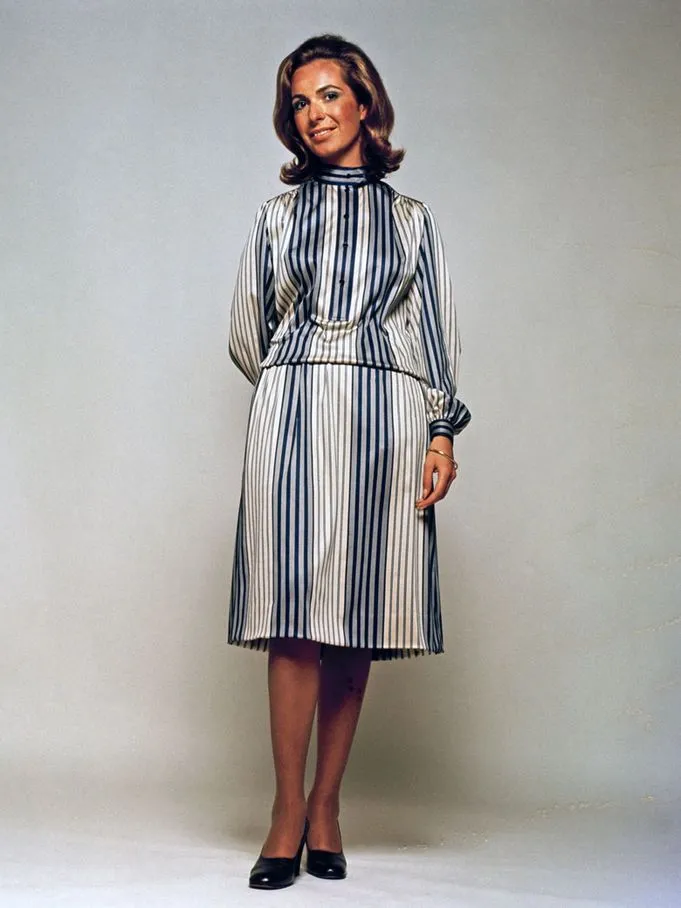
Its navy and beige striped dress used contrasting lines to produce an optical effect inspired by Air France’s visual identity.
The uniform helped distinguish Concorde’s onboard service from the airline’s conventional fleet.
Air France later commissioned Nina Ricci to design another Concorde uniform for the aircraft’s tenth anniversary in 1985.
1978–1987: More choice for cabin crew
During the late 1970s, Air France moved away from a single prescribed outfit towards a more flexible wardrobe.
Carven, Nina Ricci and Grès contributed to the 1978 collection, combining the airline’s traditional blue and white with red accents.
Staff were also involved in the design process.
The approach continued in 1987, when Air France commissioned Nina Ricci, Carven and Louis Féraud to create different elements of a coordinated uniform.
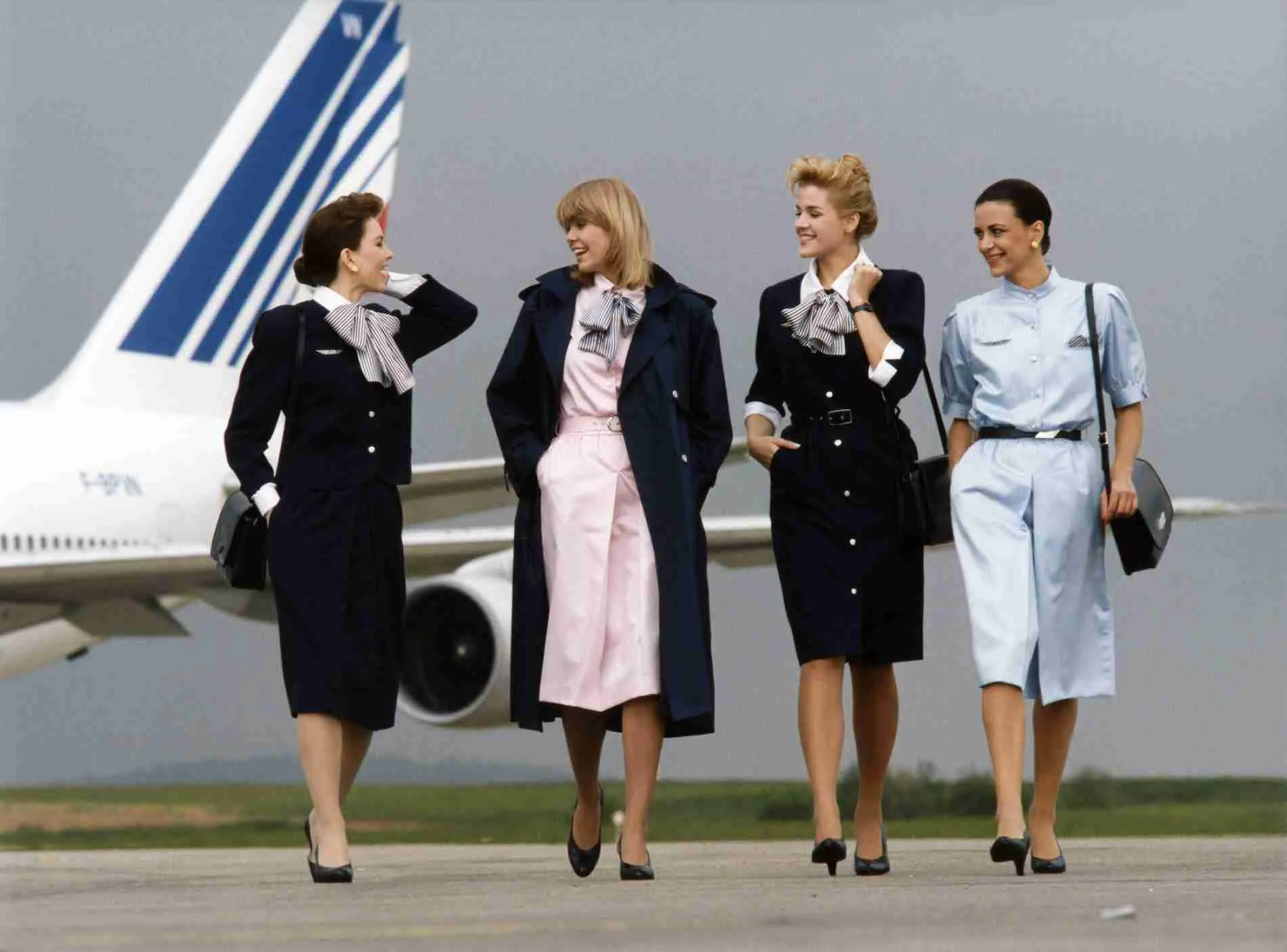
Nina Ricci designed the coat, Carven developed the principal tailored pieces and Louis Féraud produced a summer dress.
Cabin crew voted on the garments that would form the final collection.
This reflected a growing recognition that uniforms had to meet operational requirements as well as represent the airline’s image.
2005: Christian Lacroix creates the modern Air France uniform
In 2005, Christian Lacroix introduced the uniform collection that remains closely associated with Air France today.
The designer created approximately 100 interchangeable pieces, including tailored suits, dresses, coats and accessories.

The collection retained the airline’s traditional navy blue while introducing red accents and distinctive styling details.
It was intended to provide a recognisable appearance across different roles and working environments while allowing staff to combine garments.
Christian Lacroix.
“You can recognize an Air France crew in any airport in the world, not just by their ‘colors’, of course, but by this inexpressible blend of allure and style.”
Air France’s official uniform history describes the collection as a balance between a consistent corporate identity and the designer’s creative approach.
Why Air France uniforms became part of its identity
Air France’s long association with leading designers distinguishes its uniforms from ordinary corporate workwear. The airline has repeatedly used clothing to express its French heritage, drawing on fashion houses known internationally for tailoring and design.
Its uniforms have also evolved with the profession itself. Cabin crew are trained safety professionals whose clothing must accommodate demanding duties, not simply provide a fashionable appearance.
The airline’s historical collections illustrate how those requirements have influenced successive designs. In 2023, Air France celebrated its 90th anniversary with exhibitions and fashion presentations showcasing historic uniforms. The airline continued to display its design heritage in 2026, including an exhibition in Tokyo featuring uniforms by Dior, Balenciaga and Lacroix.
From the first female flight attendants in 1946 to today’s international crews, the uniforms remain one of Air France’s most recognisable links between aviation and French fashion.
Air France’s uniforms evolved alongside its visual identity. The airline’s historic winged seahorse emblem, known as the hippocampe ailé, dates back to its predecessor Air Orient and became part of Air France’s identity when the airline was established in 1933.
The emblem appeared on aircraft, uniforms and other company materials, reinforcing a consistent image as the airline expanded internationally. Although Air France has modernised its branding over the decades, the winged seahorse remains an important symbol of its heritage. Read more about the history of Air France’s winged seahorse emblem.