

Smart suitcases can charge your phone, track your belongings and even follow you through the airport. But can you take them on a plane? The answer depends on the battery, whether it can be removed and where you plan to pack your bag.
Smart luggage has come a long way since the first generation of connected suitcases appeared more than a decade ago. What started with built-in USB chargers and digital scales has expanded to include electronic locks, location tracking and even motorised wheels.
These features can be convenient, but lithium batteries are subject to strict airline safety rules. A suitcase that works perfectly well on the ground might not be accepted at check-in if its battery cannot be removed.
Here’s what you need to know before flying with smart luggage in 2026.
Can you take smart luggage on a plane?
Yes, provided your smart luggage meets the airline’s battery requirements. The most important consideration is whether the lithium battery is removable.
According to the International Air Transport Association (IATA), smart baggage with a non-removable lithium battery exceeding 2.7 watt-hours (Wh), or a lithium metal battery containing more than 0.3 grams of lithium, is prohibited.
For larger batteries, the safest choice is a suitcase designed so that the battery can be removed easily.
If you check the suitcase into the hold, you must remove the battery and carry it in the cabin, subject to the applicable battery limits.
The US Federal Aviation Administration (FAA) also advises passengers to carry battery-equipped luggage in the cabin unless the batteries have been removed. Its rules provide an exception for checked bags with very small batteries within the 2.7 Wh or 0.3 g limits.
Individual airlines may apply stricter conditions, so check their baggage policies before travelling.
Smart luggage battery rules at a glance
| Smart luggage feature | Cabin baggage | Checked baggage |
|---|---|---|
| Removable lithium battery, within permitted limits | Generally allowed | Remove battery and carry it in the cabin |
| Non-removable battery over 2.7 Wh or 0.3 g lithium metal | Not allowed | Not allowed |
| Non-removable battery within the small-battery limits | May be allowed | May be allowed, subject to airline rules |
| Built-in power bank | Must be removable | Remove and carry in cabin |
| AirTag or similar small tracker | Generally allowed | Generally allowed if within battery limits |
| Motorised luggage | Depends on battery and airline restrictions | Check airline rules; battery removal may be required |
These are general rules for ordinary passenger luggage. Airlines may impose additional restrictions, particularly on powered or ride-on suitcases.
Can you check a smart suitcase into the hold?
Yes, if it has a removable battery and the battery is taken out before the suitcase is checked.
This also applies if your cabin bag is unexpectedly taken at the gate because the overhead lockers are full.
Before handing over the bag, remove its power bank or detachable lithium battery and keep it with you in the passenger cabin.
A battery that cannot be removed may prevent the suitcase from travelling at all if it exceeds the permitted small-battery limits.
If you are shopping for smart luggage, look for a battery compartment that can be opened without tools. It should be possible to remove the battery quickly at check-in or the boarding gate.
Can you bring a power bank on a plane?
Power banks must travel in cabin baggage, not checked luggage.
Most ordinary lithium-ion batteries rated at up to 100 Wh are permitted, subject to airline restrictions. Batteries between 100 and 160 Wh may require airline approval, while larger batteries are generally prohibited in ordinary passenger baggage.
There is also an important change for 2026.
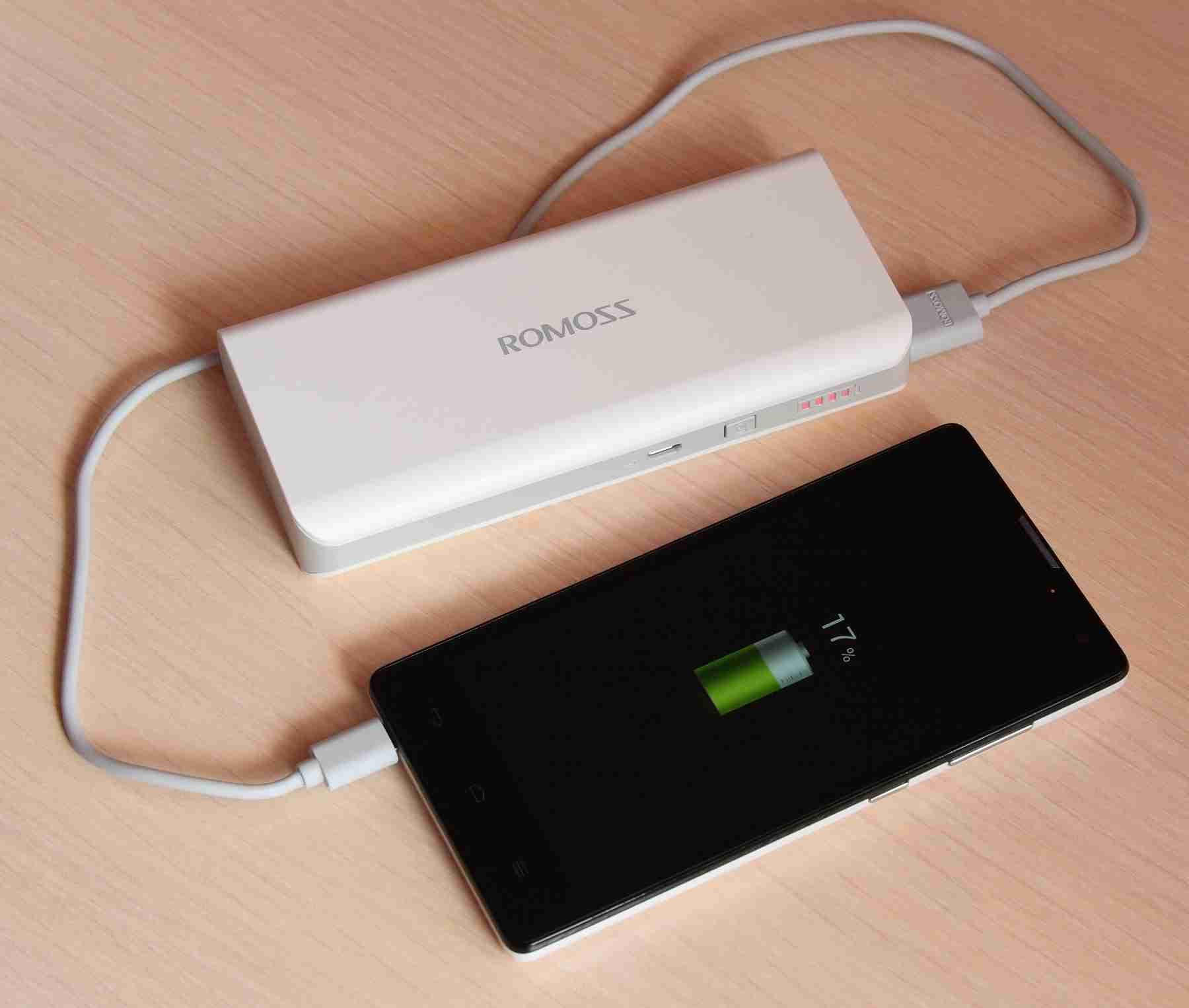
Following amendments introduced by the International Civil Aviation Organization (ICAO) in March, passengers are limited to two power banks for personal use, and recharging a power bank during a flight is prohibited under the updated international provisions.
The 2026 IATA lithium battery guidance explains the requirements.
Airlines may also prohibit using power banks to charge phones or other devices during the flight, so check the carrier’s instructions.
How do you know whether your battery is allowed?
Look for its watt-hour rating, usually printed on the battery.
If the label gives the capacity in milliamp-hours (mAh), you can calculate the watt-hours using the battery’s nominal voltage:
Watt-hours = (mAh × volts) ÷ 1,000
For example, a 20,000 mAh battery rated at 3.7 volts has a capacity of 74 Wh.
Be careful: the USB output voltage is not necessarily the battery’s nominal voltage. Check the manufacturer’s specifications rather than assuming a 5-volt rating.
If airline staff cannot establish the battery’s capacity, they may refuse to accept it.
Are Apple AirTags and luggage trackers allowed in checked baggage?
Yes, small Bluetooth trackers such as Apple AirTags can generally travel inside checked luggage.
Their batteries are much smaller than the power banks fitted to smart suitcases.
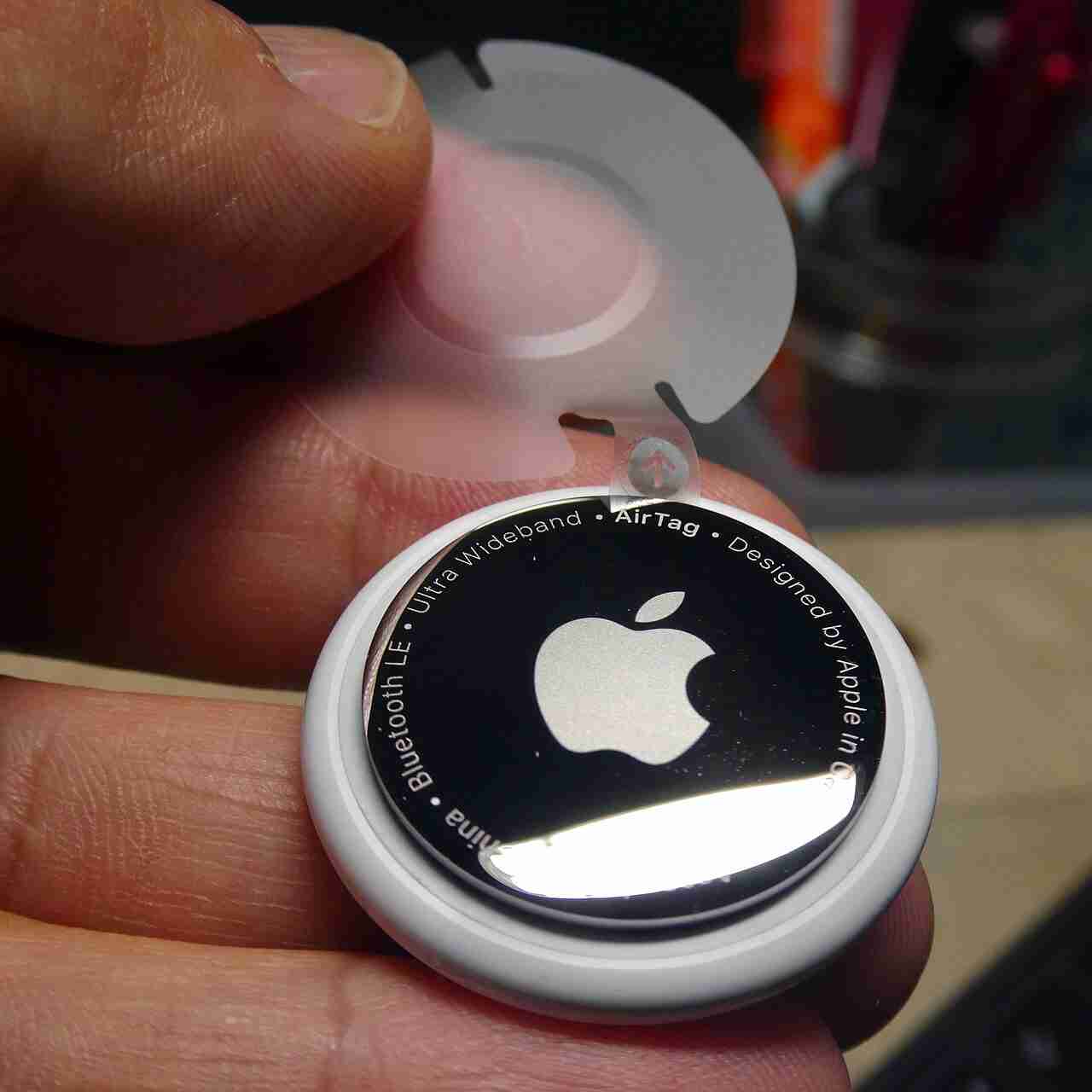
The FAA specifically addresses baggage tracking devices, permitting trackers in checked bags as long as their batteries remain within the small-battery limits.
That means there is an important distinction between a suitcase with a substantial rechargeable battery and an ordinary suitcase containing a small tracking device.
You do not generally need to remove an AirTag before checking your luggage, although airline-specific restrictions still apply.
Why do airlines restrict lithium batteries in luggage?
Lithium batteries can overheat if they are damaged, short-circuited, defective or exposed to excessive heat.
In some circumstances, a failing battery can enter thermal runaway, a process in which rising temperatures trigger further reactions inside the battery. This can produce intense heat, smoke and fire.
The concern is particularly serious when a battery is inaccessible in the aircraft hold.
Cabin crew are trained to respond to overheating electronic devices and lithium battery fires. A problem in the passenger cabin can be identified and addressed more quickly.
The European Union Aviation Safety Agency (EASA) issued updated safety recommendations in May 2025, urging airlines to improve passenger information and reinforce procedures for handling battery incidents.
Passengers should immediately tell cabin crew if a battery becomes unusually hot, starts swelling, emits smoke or appears damaged. Do not attempt to hide or dispose of an overheating battery.
What about motorised and ride-on suitcases?
Motorised suitcases present an additional complication.
Some models use relatively large batteries to power wheels or allow passengers to ride on the luggage. These batteries may exceed ordinary passenger baggage limits.
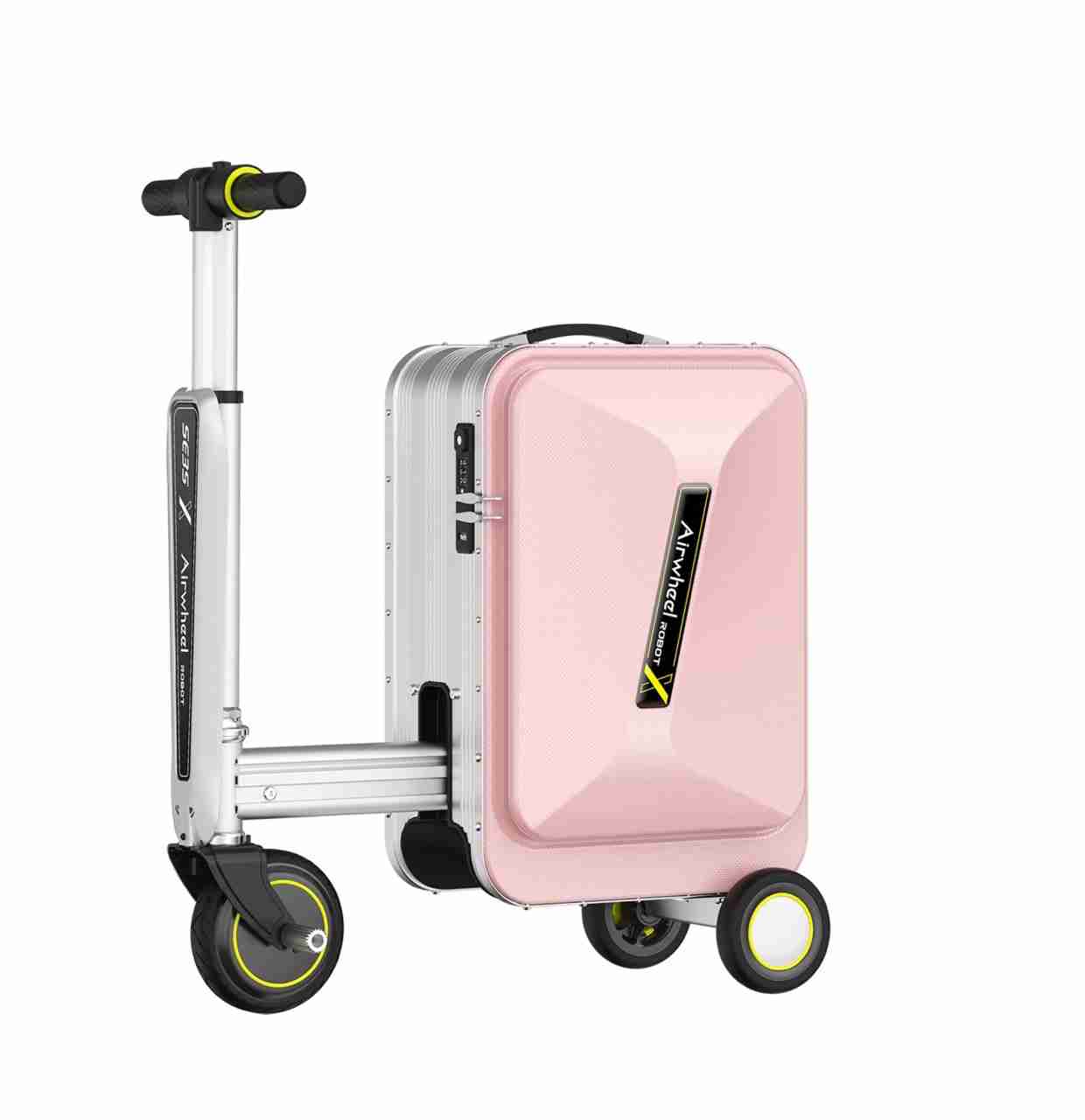
Removing the battery does not automatically guarantee that the suitcase will be accepted. Airlines may also have restrictions concerning the size, weight and type of powered luggage.
Before travelling with a motorised suitcase, check the airline’s specific policy and the battery’s watt-hour rating.
What to check before buying smart luggage
A smart suitcase should make travel easier, not create another problem at the airport.
Before buying one, check:
- Battery removal: Can you remove the battery without tools?
- Battery capacity: Is the watt-hour rating clearly marked?
- Airline compatibility: Does the manufacturer explain how the luggage meets aviation battery requirements?
- Charging features: Can you use an ordinary removable power bank instead of a permanently installed battery?
- Replacement parts: Can the battery be replaced if it fails or deteriorates?
For many passengers, a conventional suitcase combined with a separate power bank and small Bluetooth tracker may be a simpler option.
It provides much of the convenience of smart luggage without tying the bag’s usefulness to an integrated battery.
Frequently asked questions about smart luggage
Can I fly with a suitcase that has a built-in USB charger?
Yes, if the battery meets the airline’s requirements. A USB charging port alone is not a problem. What matters is the battery supplying the power. If the suitcase contains a power bank, it must be removable.
What happens if my smart luggage battery cannot be removed?
If the battery exceeds 2.7 Wh, or the lithium metal content exceeds 0.3 g, the suitcase is generally prohibited as passenger baggage. Very small non-removable batteries may qualify for an exception, subject to airline rules.
Can I put a power bank in my checked suitcase?
No. Power banks are treated as spare lithium batteries and must be carried in the passenger cabin.
Do I need to remove an AirTag before checking my luggage?
Generally, no. Small baggage trackers that meet the applicable battery limits can remain in checked luggage.
Can I fly with a 20,000 mAh power bank?
Usually, yes, provided its watt-hour rating is within the permitted limit and it meets the airline’s policy. A typical 20,000 mAh power bank rated at 3.7 V has a capacity of 74 Wh.
What if my smart cabin bag is checked at the gate?
Remove its detachable lithium battery or power bank before handing the bag to airline staff. Keep the battery in the cabin.
Before you fly
Smart luggage is not automatically prohibited, but the design of its battery can determine whether an airline will accept it.
Check the battery capacity, make sure it can be removed and read your airline’s rules before leaving for the airport.
For the latest guidance, consult IATA’s passenger battery safety information, the FAA’s PackSafe guidance and your airline’s baggage policy.
Updated October 2026. Battery rules and airline restrictions can change; always confirm the requirements for your flight.
